Chemistry in the Current
.jpg)
The Fifth Grade has spent this trimester submerged in a critical essential question: How can chemical sciences help us build cleaner water? While our urban systems rely heavily on wastewater treatment plants to make water safe for the tap, our students discovered a significant gap: these plants don't necessarily make our waterways safer for recreation or the living things within them.
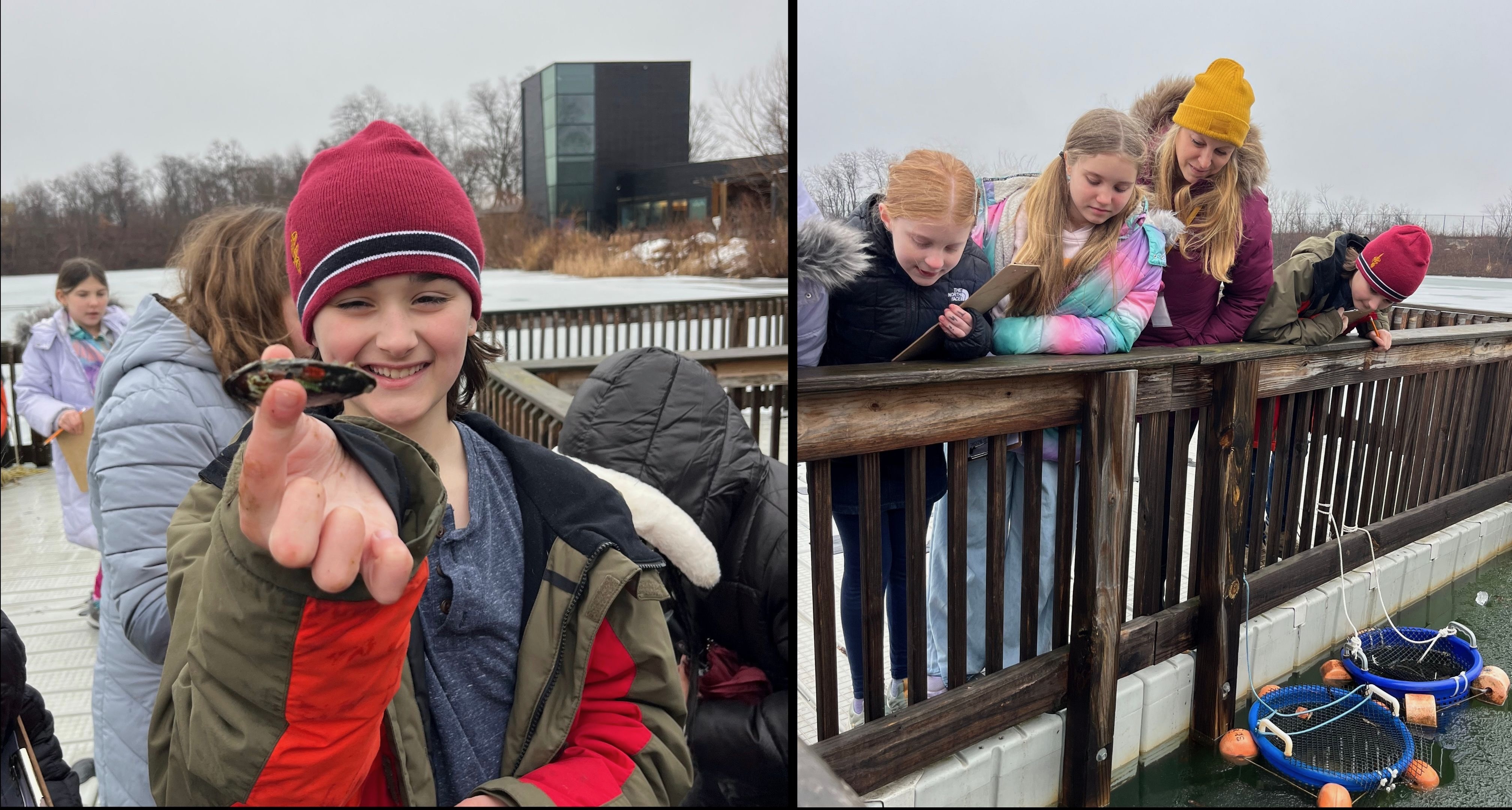
Last week, the classroom moved from the classroom to the banks of the Schuylkill during their visit to the Fairmount Waterworks. There, they explored a "living" solution to this chemical challenge: the propagation of freshwater mussels.
What are Freshwater Mussels?
Freshwater mussels are bivalve mollusks - similar to clams and oysters - with hinged shells that protect a soft-bodied animal within. These remarkable creatures can live for over 100 years, but they are currently among the most imperiled animals on the planet. Of the nearly 300 species in North America, over 70% are at risk of extinction due to pollution, habitat loss, and the decline of the fish species they need to survive.
Real-World Data Collection
At the Waterworks Hatchery, FFS students saw firsthand how the Philadelphia Water Department is breeding these bivalves to combat pollution. Freshwater mussels are nature’s ultimate filtration system, and a single healthy mussel can filter up to 15 gallons of river water a day by inhaling water and filtering out tiny organic particles.
FFS fifth graders stepped into the role of professional scientists, contributing to real-world data collection for the Waterworks Hatchery. They handled live mussels, using specialized tools to measure and record growth and health stats for the hatchery's research team. Utilizing pH and dissolved oxygen probes, the class analyzed the "vitals" of the water. They learned that mussels cannot survive in muddy or silty environments, making water clarity and erosion control essential for their survival. They saw how a healthy mussel bed can transform the health of a river in ways a treatment plant cannot. This led to understanding the intricate relationship between the mussels and local fish species like brook trout, realizing that to save the mussels, we must also protect the entire river ecosystem.
The Scientists and Problem-Solvers of the Future
Now back on campus, the Fifth Grade is synthesizing their field findings with their broader chemistry curriculum. Having seen the biological side of water health, they are now diving deeper into chemical interventions, weighing the pros and cons of human-made systems versus nature-based solutions.
At Frankford Friends, we believe that science can be most powerful when it is used in service of a community. By working alongside professional conservationists, our students are learning that they don't have to wait for the future to be "problem solvers." They are already part of the work to ensure a cleaner, healthier Philadelphia.
.jpg)