Puddles, Pies, and Paleontology: The Magic of Snow and Mud
.jpg)
The transition from winter to spring has brought some messy, marvelous gifts to our campuses this week: mud and snow. As the ice melts into the wood chips, mud, and sand, our young explorers have wasted no time transforming these puddles into a full-scale laboratory of sensory discovery.
Whether it is a full-body plunge into a snow drift or the careful "baking" of mud pies in buckets, our campuses have been alive with the sights and sounds of uninhibited play.
The Science Behind the Slop
While it might look like just a laundry challenge to adults, mud and snow play is a powerhouse for early childhood development that we call sensory-integrated learning, and the benefits are backed by years of research:
- Cognitive Development: When children mix water and dirt, they are acting as scientists. They are experimenting with physics and chemistry—observing viscosity, liquid-to-solid ratios, and cause-and-effect. They apply their discoveries to later learnings.
- Tactile Stimulation: Tactile experiences, such as feeling the textures of snow and mud, build neural pathways in the brain. This sensory input helps children regulate their nervous systems and focus.
- Imaginative Agency: In the world of learning, mud is an open-ended material. Unlike a toy with a specific button or purpose, snow and mud can be anything - soup, cement, a mountain... Open-ended learning through play fosters high-level divergent thinking and creativity.
Bringing the Outdoors In
Our students’ exploration doesn't stop at the door. To further investigate these textures, our two-year old teachers created a "pretend mud" sensory bin inside. Using a mixture of flour, cocoa powder, and warm water, they even added an olfactory (scent) dimension to the experience. The FFS toddlers designed ingenious engineering experiments, utilizing sifters not just for scooping, but as specialized tools to "grate" mud off toy dinosaurs. Along the way, they strengthened their fine motor skills and hand-eye coordination essential for future writing and tool use.

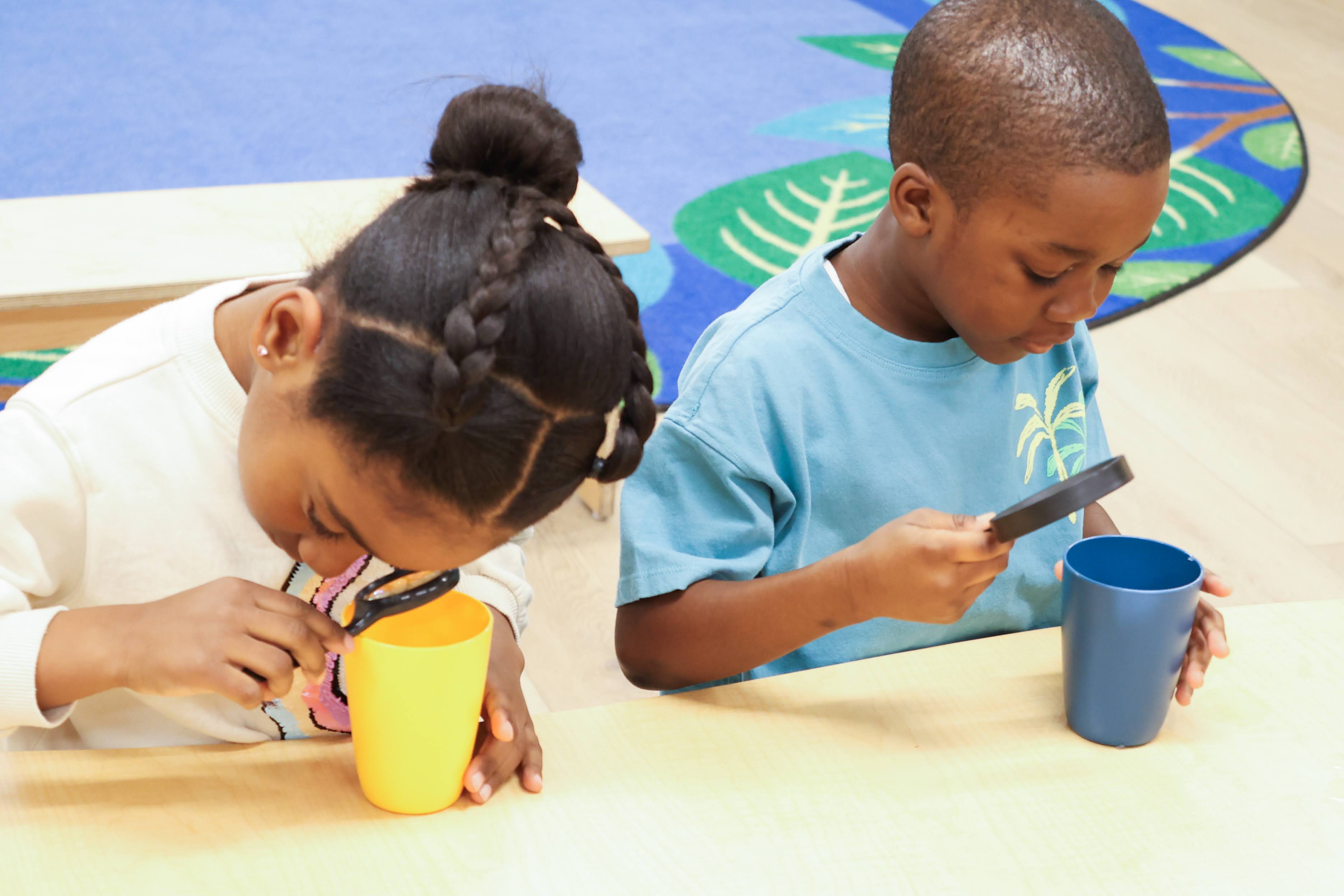
The Kindergarteners’ curiosity has turned toward understanding the makeup of snow through a series of hands-on scientific investigations in their science class. To explore its properties, the students engineered their own "snow" using baking soda and shaving cream, adding silver glitter to replicate its natural sparkle and comparing its unique texture and temperature to the snow found outdoors. After observing real snowflakes with magnifying glasses and documenting their findings, the class grew their own crystals on various shapes to simulate the process of snowflake formation. The exploration continues next week as they transition into thermal science, testing how different materials can keep snow cold indoors and recording both their hypotheses and results in their snow journals.
Frankford Friends is an “all-weather outdoor play” school. We encourage outdoor learning every day, but that means our researchers need the right equipment to dive into fully messy fun!
.jpg)